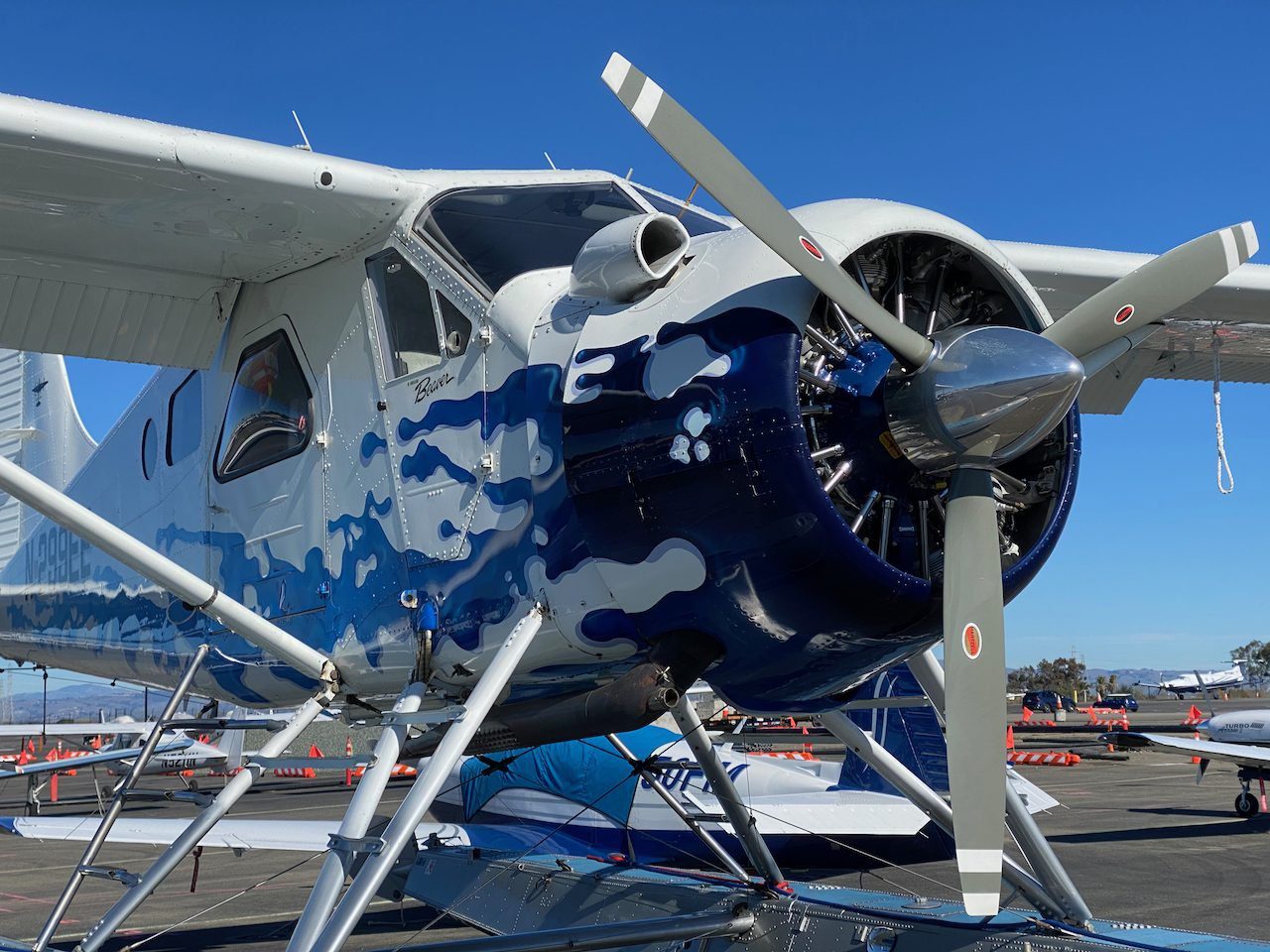
The DHC-2 Beaver is a single-engine, high-wing, propeller-driven, STOL(Short Take-Off and Landing) aircraft developed by de Havilland Canada. It was designed for use in rugged and remote areas and has been used for a variety of purposes including bush flying, air taxi, and as a utility aircraft. It first flew in 1947 and was produced until 1967. Despite this, it is still used widely today and is considered one of the most successful aircraft of its kind.
The DHC-2 Beaver’s livery caught my eye when I was on the Palo Alto tarmac. As I approached the plane, I was surprised by its deceiving size. Despite being a single-engine plane, it was quite large and seemed to be built to withstand harsh conditions. The metal construction of the plane was impressive and had clearly been well maintained over the dozens of years it had existed.
But what really intrigued me were the huge floaters attached to the bottom of the plane. I had never been to a seaplane base, making a catch like this special. In fact, the huge floaters have landing gear that are removable, enabling the plane to land both at seaplane bases and airports like Palo Alto.

History
The first flight of the DHC-2 Beaver took place on August 16, 1947, and it quickly gained a reputation as a reliable and capable aircraft. In the following years, the Beaver was used for a variety of purposes, including bush flying, air taxi, and as a utility aircraft.
One of the most notable uses of the DHC-2 Beaver was during the construction of the Alcan Highway, a road that connected Alaska to the lower 48 states. The Beaver played a crucial role in the construction of the road, as it was able to land on small, unprepared strips and deliver supplies to the workers.
The DHC-2 Beaver also played a vital role in the early days of the oil industry in Alaska, with oil company’s using the aircraft to explore and develop oil fields in the remote regions of the state.
The Beaver was also used by the military, with the U.S. Army and the U.S. Air Force using it for reconnaissance, transport, and search-and-rescue missions. The Royal Canadian Air Force and the Royal Canadian Navy also operated Beavers.
The DHC-2 Beaver was produced until 1967, but due to its rugged design and reliability, many Beavers are still in service today. It remains a popular aircraft for bush flying and backcountry operations. Its versatility, durability, and capability made it one of the most successful and enduring aircraft of its kind.

More Aircraft Profiles
Explore more aircraft: DHC-2 Beaver · Citabria 7ECA · Piaggio P180 Avanti · Epic E1000 · Piper Apache 150 · Daher-Socata TBM 700 · Wing Icing on a Boeing 757 · US Coast Guard C-27J Spartan · Airbus A380


Leave a Reply