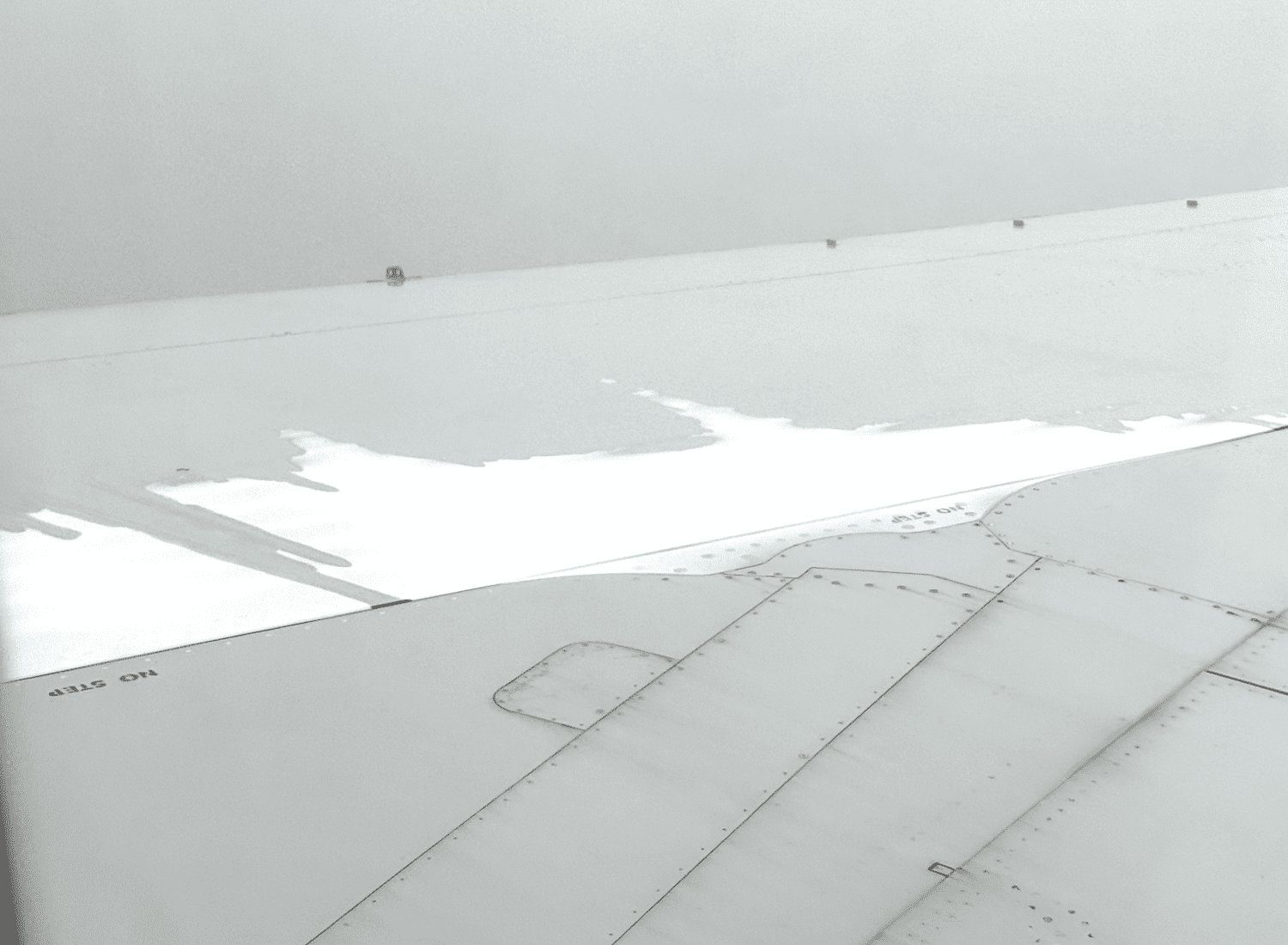
On a recent flight back to the Bay Area, I had a memorable experience that caught my attention as an aspiring aerospace engineer. The weather was grim—low visibility, frigid air, and the kind of chill that promised freezing temperatures. As our Boeing 757 descended toward SFO, I looked out the window and noticed a thin layer of ice forming in the middle of the wing. Until that moment, I had always associated such icing risks with small planes, not large commercial jets.
From my vantage point, the ice appeared to be rime ice, though I couldn’t be sure. I also saw large droplets of water running down the wing, which seemed to be mixing with a streaky fluid—likely the plane’s anti-icing chemical. This system, I realized, was critical to preventing ice from adhering to the wing and compromising flight performance and safety.
After some research, I discovered that the Boeing 757 uses different anti-icing methods for its wings and engines. For the wings, hot air from the engines helps prevent ice formation, while the engines’ leading edges are heated to avoid buildup. When ice is detected, pilots can manually—or the system can automatically—activate anti-ice measures that direct hot air to key areas, melting existing ice and preventing further accumulation.

Seeing this process firsthand sparked a new curiosity in me: How exactly does icing affect lift and drag? And how can design features mitigate such risks? I’m eager to test these questions in my homemade wind tunnel. Studying the nuances of icing on aircraft surfaces has become a personal project that blends my passion for hands-on experimentation with my broader interest in aerospace engineering.
Icing can drastically reduce lift, increase drag, and, in severe cases, lead to catastrophic outcomes. Commercial aviation counters these threats with sophisticated anti- and deicing systems, ensuring that modern aircraft remain safe in cold-weather conditions. For anyone fascinated by aviation, understanding how these systems work offers a window into the intricate world of aerospace engineering.
Witnessing icing in real-time reinforced my commitment to exploring this field. It was a powerful reminder that even routine flights involve remarkable technology—and that there’s always more to learn about keeping aircraft aloft and passengers safe.
More Aircraft Profiles
Explore more aircraft: DHC-2 Beaver · Citabria 7ECA · Piaggio P180 Avanti · Epic E1000 · Piper Apache 150 · Daher-Socata TBM 700 · Wing Icing on a Boeing 757 · US Coast Guard C-27J Spartan · Airbus A380