Jordan Kam and I are kicking off a new project that explores the possibility of creating an aerial corridor between NASA Ames Research Center and UC Berkeley, using next-generation electric vertical takeoff and landing (eVTOL) aircraft.
Project Goals and Key Questions
This concept is part of a broader push toward urban air mobility—rethinking how people and cargo might move through cities in the future. Our goal is to evaluate whether such a route is feasible, what challenges it would face, and what opportunities it could unlock for research, industry collaboration, and campus innovation.
In this first phase, we’re focusing on two key questions:
- Where would these aircraft fly?
- Where could they land near Berkeley?
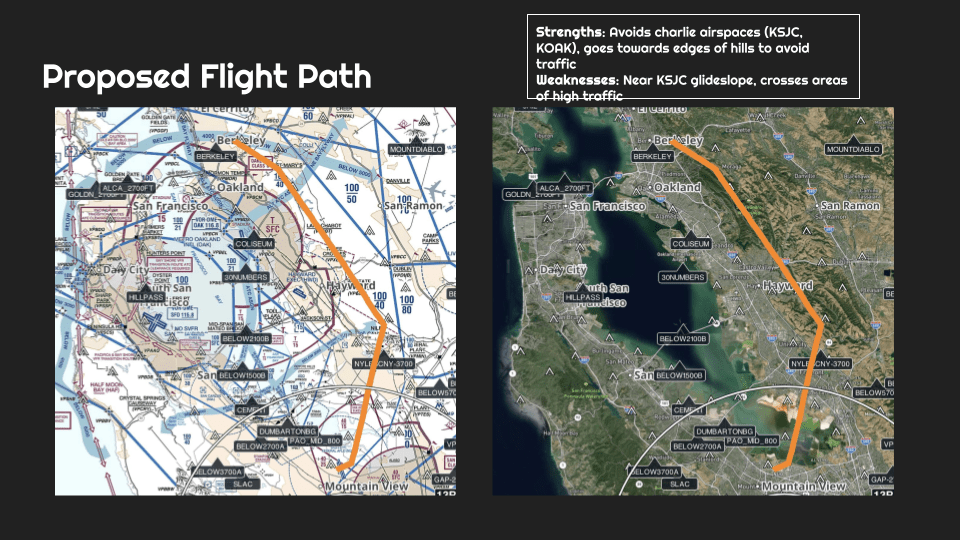
We’re using Microsoft Flight Simulator to model different flight paths, considering airspace constraints around major airports like San Jose and Oakland. We’re also starting to research vertiport locations—possible landing spots on or near the UC Berkeley campus. Each site comes with pros and cons, from existing infrastructure and wind conditions to legal and urban planning issues.
This is an exploratory effort. There are a number of airspace and safety concerns we’ll need to understand better—especially given how complex Bay Area air traffic already is. But the potential benefits are exciting, and we believe there’s a unique opportunity here to connect academic research with cutting-edge aerospace thinking.
We’ve pulled together a short presentation that outlines our initial progress and some of the open questions we’re tackling next. It includes visuals of the proposed flight paths, site candidates in Berkeley, and background on how we’re approaching the technical and regulatory challenges.
See the presentation below!
This research explores what an eVTOL air corridor between NASA Ames and UC Berkeley would look like, considering airspace constraints and infrastructure needs.